
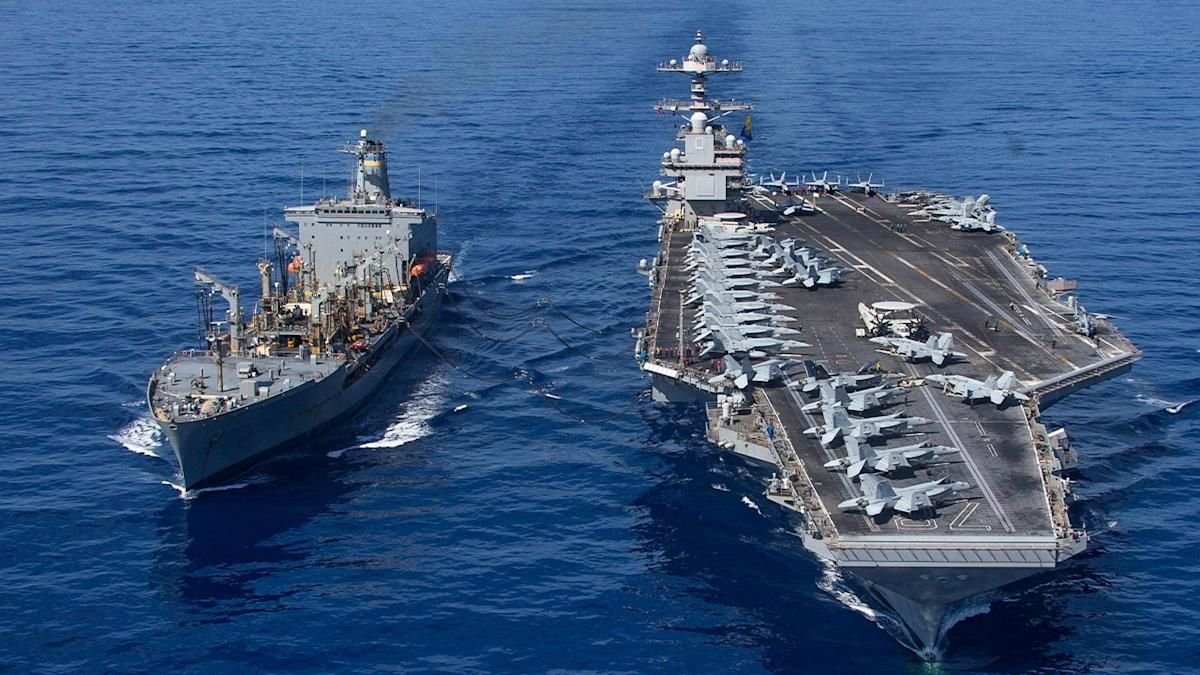
France is currently in the center of global attention due to its largest military exercise, ORION 26. Running from February to April 2026, this exercise is considered the most ambitious French war exercise since the Cold War. It involves approximately 12,500 troops, hundreds of armored vehicles, dozens of fighter aircraft, large naval vessels, and cyber and space units. The exercise’s purpose is not merely a display of force, but rather a realistic test of the real conditions of high-intensity modern warfare—one that involves all fronts: land, sea, air, cyber, and space.
The hypothetical scenario of this exercise is also quite realistic. In it, an expansionist country, “Mercury,” attempts to destabilize its neighbor, “Arnland,” to prevent it from joining the European Union. The beginning is not with a direct military invasion, but rather through information warfare, political pressure, and support for local armed groups. In early 2026, France intervenes, leading an international coalition. This demonstrates that modern warfare is now fought at the level of minds and information, rather than tanks.
French-led “Coalition War” exercise
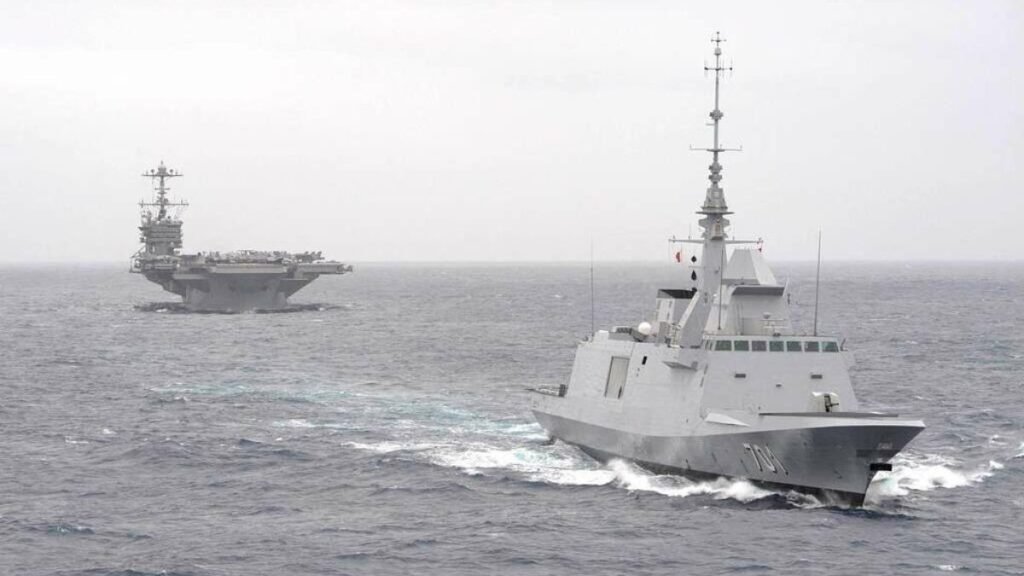
The most significant feature of ORION 26 is that France is playing the role of “framework nation.” This means that French officers are responsible for planning, command, and coordination of the entire operation. Multinational military command exercises of this magnitude are rare in Europe. This is not only a test of the French military’s capabilities, but also a test of Paris’s ability to effectively lead and unite multiple nations in a crisis.
Various allied countries have contributed troops, aircraft, and ships. But Morocco’s decision has drawn the most attention. It is not merely a symbolic participation, but has sent its navy’s most advanced warship—a sign of its growing military confidence.
Morocco’s most powerful warship in action
Morocco has deployed the frigate Mohammed VI, considered the pride of its naval fleet, in the exercise. This ship is named after Mohammed VI and is a modern FREMM-class warship jointly developed by France and Italy. Weighing approximately 6,000 tons, the ship can travel at a speed of approximately 27 knots and is equipped with advanced sensors, anti-submarine systems, and surface-to-air missiles.
Such warships act as a “mobile shield” for a naval task force. They detect enemy submarines, monitor air threats, and ensure the security of sea lanes. Placing its most modern ship under foreign command is a deliberate move by Morocco, aimed not at prestige but at improving capabilities.
New Directions for France-Morocco Defense Cooperation
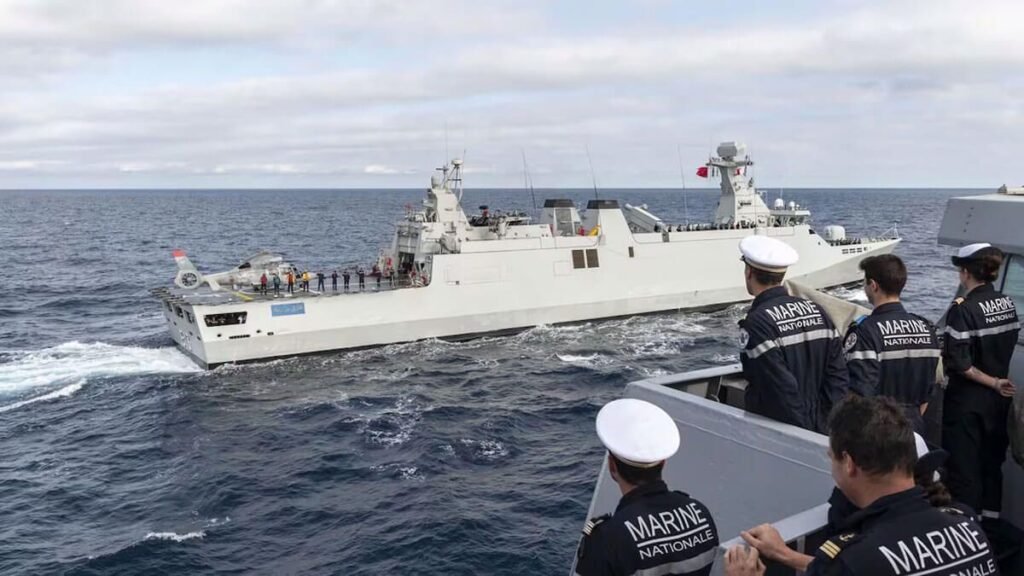
Defense relations between France and Morocco have been growing for years, but now this cooperation has moved beyond formality to a practical level. Joint military exercises, officer exchanges, training programs, and intelligence cooperation are constantly increasing. Participation in ORION 26 demonstrates that Morocco has become an active military partner, not just an observer.
For France, it provides a reliable ally in southern Europe, capable of securing its territory from the Strait of Gibraltar to West Africa. For Morocco, it offers high-level training, technical cooperation, and an opportunity to increase political influence within European countries.
ORION 26: Not Just an Exercise, a War Laboratory of the Future
This massive exercise emphasizes conventional warfare as well as modern “hybrid warfare.” Cyber teams are practicing network attacks and defenses, space units are simulating situations like satellite destruction, and political leadership is practicing decision-making in simulated crises. All of this demonstrates that modern warfare is won not simply by sheer numbers of troops, but by information, technology, and coordination.
Preparing for “high-intensity conflict,” a full-scale war between major nations, is at the heart of this exercise—a war involving heavy weapons, long-range attacks, large casualties, and long-lasting supply chains. In this context, developing the ability of different countries’ militaries to work together in accordance with NATO standards is also an important goal.
Risks and Benefits
Such a large and complex exercise carries risks—the potential for accidents at sea and in the air, the security of sensitive military information, and the risk of political misunderstanding. But the benefits are far greater. Soldiers and commanders gain experience that is not possible in simulators. Plans are tested under real pressure, and trust between allies is strengthened.
Ultimately, ORION 26 is not just a preparation for war, but also a signal of the future global security architecture. France is demonstrating leadership, and countries like Morocco are proving that they are on the path to becoming capable military powers, not just regionally, but internationally.
FAQs
What is ORION 26?
ORION 26 is a large-scale military exercise led by France to simulate a high-intensity modern war across land, sea, air, cyber, and space domains.
When is the exercise taking place?
It runs from February to April 2026 and involves around 12,500 troops and major military equipment.
Which countries are participating?
Several allied nations are involved, including Morocco, which sent its most advanced naval warship.

