
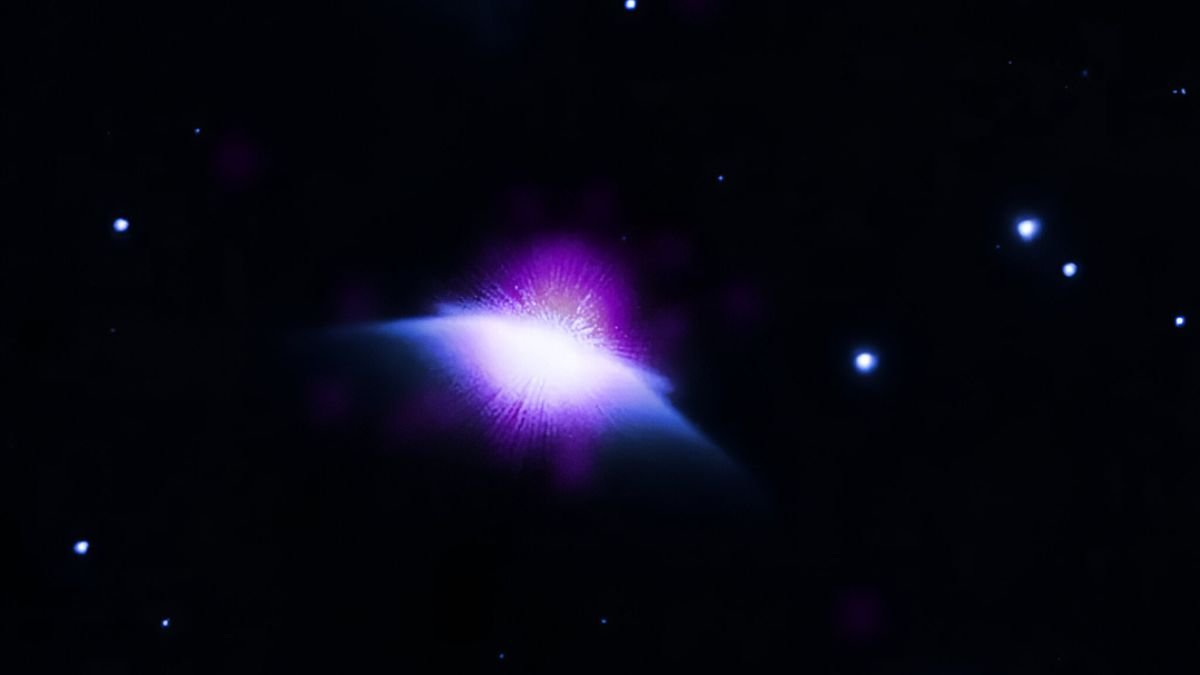
NASA’s Webb Telescope Locates Former Star: About 40 million years ago, a massive star exploded in a nearby galaxy. The explosion was so powerful that it unleashed immense energy and matter into space. The light emitted at that time traveled a long way across the universe and finally reached Earth on June 29, 2025. This bright signal was first recorded by the All-Sky Automated Survey for Supernovae.
As soon as this new supernova—named 2025pht—was discovered, astronomers deployed their instruments and resources to understand it in detail. But one research team chose a different approach. They turned to old records and photographs to determine which star had exploded. This discovery proved to be historic for science.
James Webb Telescope Provides a Breakthrough
Images taken by NASA’s powerful James Webb Space Telescope played a key role in solving this mystery. Old images of the galaxy NGC 1637 revealed a red supergiant star in the exact location where the supernova is now flaring.
This was the first time the Webb telescope had publicly identified the “progenitor” star of a supernova. The results were published in the prestigious journal Astrophysical Journal Letters.
According to Charlie Kilpatrick, lead scientist of the research team, “We’ve been waiting a long time for Webb to record a supernova explosion in a previously observed galaxy so we could compare the before and after images.”
A Joint Analysis of Hubble and Webb
The discovery combined images from both the Hubble Space Telescope and James Webb. Scientists closely studied images taken in 2024 by Webb’s MIRI (Mid-Infrared Instrument) and NIRCam (Near-Infrared Camera).
The analysis found that the star appeared unusually red. This meant it was surrounded by a massive amount of dust, blocking blue and shorter wavelength light.
This was the dustiest red supergiant ever observed to explode as a supernova.
The Mystery of “Missing” Red Supergiants
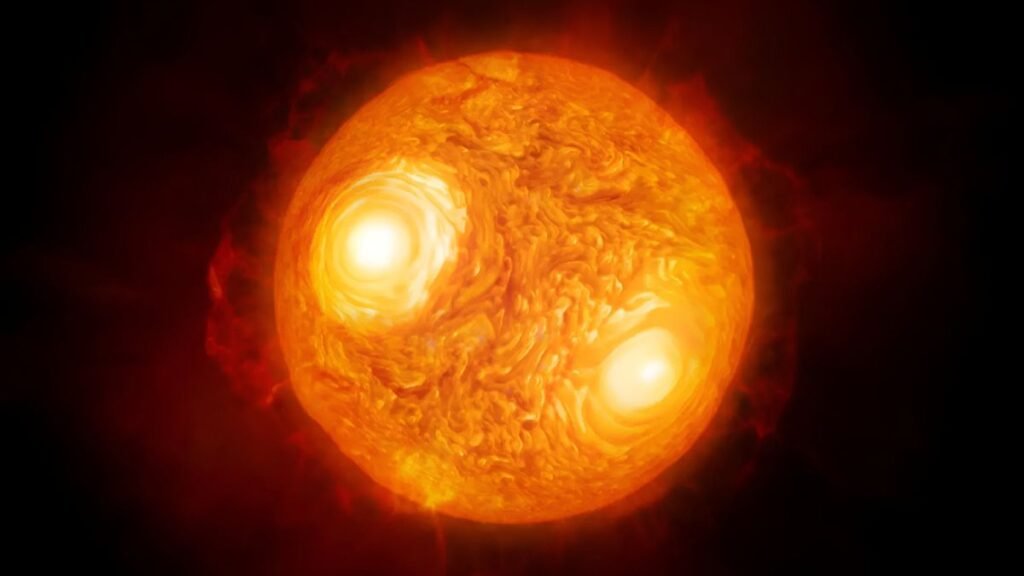
Astronomers have long grappled with a puzzle—why are the most massive and luminous stars, which should have exploded as supernovae, not clearly visible in pre-images?
One possible reason was that these older and more massive stars are surrounded by excessive dust. This dust dims their brightness so much that they are undetectable. The discovery of Supernova 2025pht supports this theory.
If massive stars become obscured by massive amounts of dust in the final stages of their lives, they can be hidden from our instruments. Thus, this is an important step toward solving the mystery of “missing” red supergiants.
Unique Discovery of Carbon-Rich Dust
Scientists were surprised not only by the amount of dust but also by its composition. Computer modeling indicated that this dust was carbon-rich rather than silicate.
Scientists typically expect such stars to contain more silicate dust. However, the carbon abundance here suggests that carbon may have been drawn from the star’s interior to the upper layers just before the explosion.
This process could indicate a “carbon surge,” or the emission of material during its final breaths. Mid-infrared observations played a key role in understanding this structure.
Future Discoveries and New Hopes
The research team is now searching for other red supergiants that could become supernovae in the future. The soon-to-be-launched Nancy Grace Roman Space Telescope could open new possibilities in this direction.
The Roman Telescope’s high sensitivity and infrared capabilities will help scientists identify stars that emit large amounts of dust in their final stages. This could not only provide early signs of supernovae but also provide a better understanding of the life cycle of stars.
James Webb: Sentinel of the Universe
The James Webb Space Telescope is the world’s most advanced space observatory today. It explores everything from the mysteries of our solar system to distant galaxies and the origins of the universe.
This is an international project led by NASA, with the European Space Agency and the Canadian Space Agency also as partners.
Webb’s new discovery not only marks a milestone in the study of supernovae but also shows how modern technology can uncover millions of years’ worth of secrets about the universe.
Conclusion
The light from a star that exploded 40 million years ago reached Earth in 2025, telling us a new story. By identifying that star, the James Webb Telescope proved that scientists can overcome the limitations of time and distance with patience and technology.
This discovery not only unravels the mystery of Supernova 2025pht but also marks a major step toward solving the puzzle of the “missing” red supergiants lurking in the universe. New observatories and missions in the coming years could provide even more surprising answers.
FAQs
Q. What did NASA’s Webb Telescope discover?
A. It identified the original star that later exploded as supernova 2025pht.
Q. How old was the light from the explosion when it reached Earth?
A. The light traveled for about 40 million years before reaching Earth in 2025.
Q. Where was the supernova located?
A. It occurred in the galaxy NGC 1637.
Q. Why was this discovery important?
A. It was the first published detection of a supernova’s progenitor star using the James Webb Space Telescope.
Q. What made this star unusual?
A. It was an extremely dusty red supergiant surrounded by carbon-rich dust.