
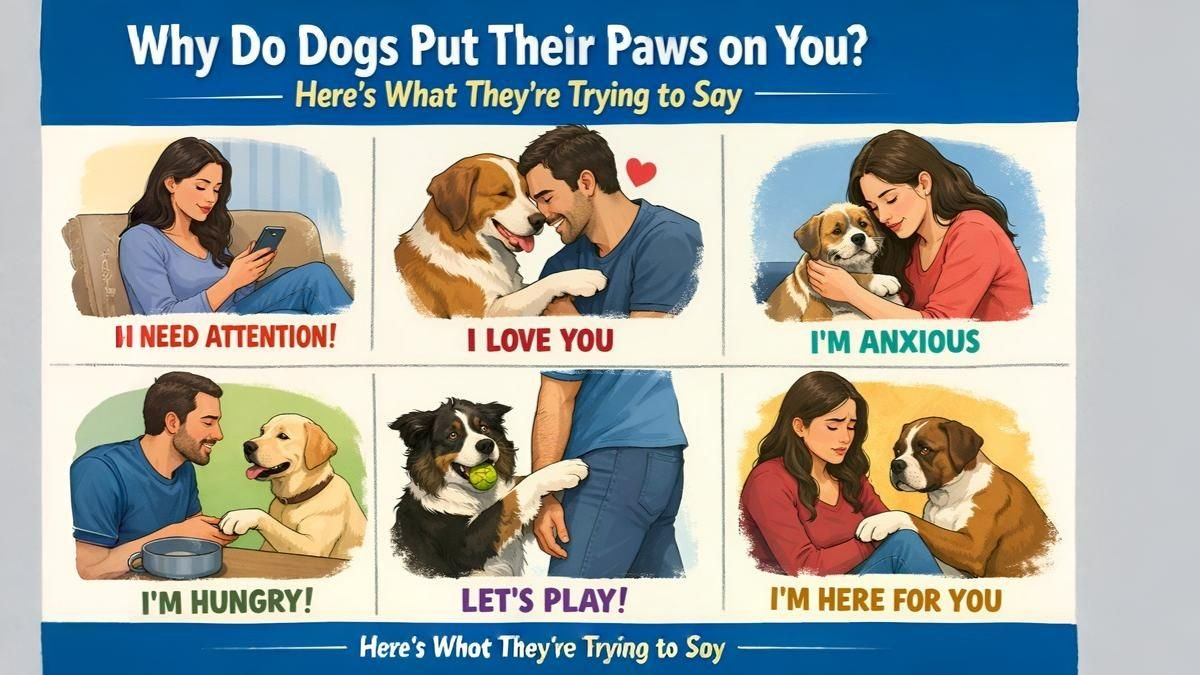
If you’ve ever been sitting quietly when your dog suddenly placed a paw on your leg, chest, or arm, you probably paused for a moment and wondered what it meant. Was it a demand, a sign of affection, or something else entirely? This simple gesture is one of the most common yet misunderstood forms of canine communication. Dogs may not speak our language, but through touch, body language, and subtle signals, they constantly express their thoughts and emotions. When a dog puts its paw on you, it is rarely random. In fact, this action often carries layers of meaning rooted in instinct, emotion, and learned behavior.
Understanding why dogs do this can deepen your bond with them and help you respond in a way that supports their emotional needs. Let’s explore the many reasons behind this familiar canine behavior.
A Natural Form of Communication
Dogs rely heavily on body language to communicate with humans and other animals. Unlike people, they cannot use words to explain what they want or how they feel. Instead, they use gestures such as tail wagging, eye contact, licking, leaning, and pawing. Placing a paw on you is one of the most direct ways a dog can get your attention. It is tactile, noticeable, and difficult to ignore.
From a dog’s perspective, using a paw is similar to how humans might tap someone on the shoulder. It is a physical way of saying, “I’m here,” or “Please notice me.” This behavior often develops naturally over time, especially in dogs that live closely with humans and learn that pawing gets a response.
A Sign of Affection and Bonding
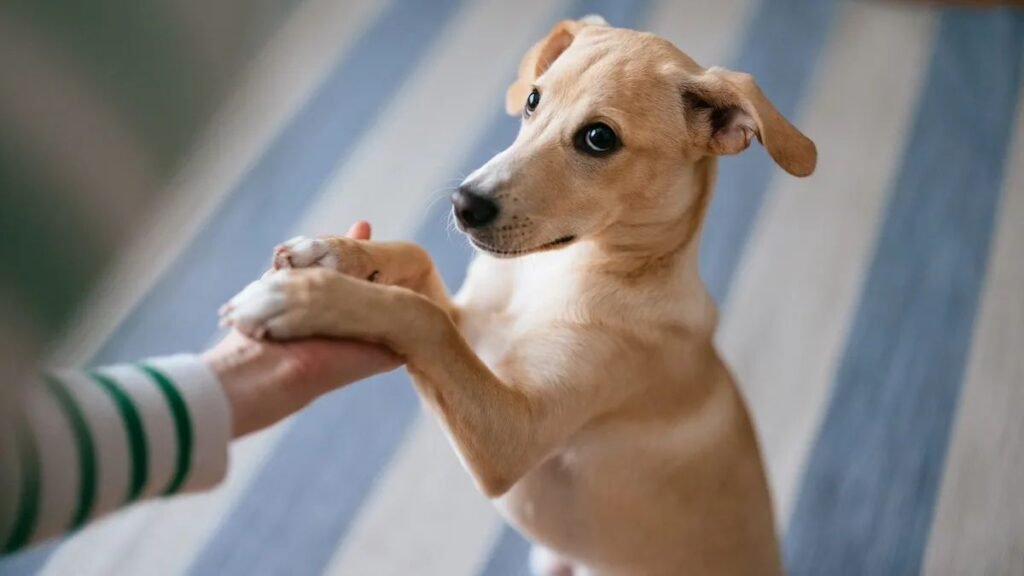
One of the most common reasons dogs put their paws on people is affection. Dogs form strong emotional bonds with their owners, and physical contact is an important part of that connection. When your dog places a paw on you, it can be their way of expressing closeness and trust.
Much like leaning against you or resting their head on your lap, pawing can be a comforting gesture. It allows your dog to feel physically connected to you, which can be especially important during moments of calm, such as when you’re relaxing on the couch or lying in bed. For many dogs, this touch is soothing and reinforces the sense that they are safe and loved.
Seeking Attention and Interaction
Dogs are social animals that thrive on interaction. If your dog feels ignored or wants engagement, placing a paw on you can be a clear signal. They may want to play, go for a walk, receive petting, or simply have your focus for a moment.
Over time, dogs learn which behaviors get results. If pawing has previously led to positive attention, such as talking, touching, or eye contact, your dog is likely to repeat it. In this sense, pawing becomes a learned communication tool. It’s not manipulation in a negative sense, but rather a smart adaptation to human behavior.
Asking for Comfort or Reassurance
Dogs experience emotions such as anxiety, fear, and uncertainty, just like humans. During stressful situations, such as loud noises, unfamiliar environments, or changes in routine, a dog may place its paw on you as a way of seeking reassurance.
This behavior is often accompanied by other signs of unease, such as wide eyes, lowered ears, or a tense posture. By touching you, your dog may be looking for emotional support, drawing comfort from your presence and calm energy. In these moments, responding gently can help your dog feel more secure.
An Instinctive Pack Behavior
Dogs evolved as pack animals, and many of their behaviors are rooted in social structure. In a pack setting, physical contact plays a role in maintaining relationships and signaling social bonds. Pawing can be traced back to these instincts, where touch helps reinforce connection and hierarchy within the group.
When your dog places a paw on you, it may be treating you as part of its pack. This is especially true in households where the dog has a strong attachment to one or more family members. The paw can be a way of saying, “You’re important to me,” or “I’m with you.”
A Way to Share Excitement or Anticipation
Sometimes, dogs put their paws on people when they are excited or anticipating something enjoyable. This might happen when you grab a leash, open a treat bag, or come home after being away. The pawing in these moments often comes with wagging tails, alert eyes, and enthusiastic body language.
In this context, the paw is an overflow of excitement. Your dog is expressing joy and eagerness, using its body to communicate emotions that are too big to contain. It’s a reminder of how deeply dogs live in the moment and express themselves openly.
A Learned Habit from Training or Play
Some dogs learn to use their paws more frequently because of training or play styles. Activities like “shake” or “high five” teach dogs that offering a paw is rewarded. Once a dog understands that paws get attention or treats, it may generalize this behavior to other situations.
Playful dogs, in particular, may paw during games as a way to invite interaction. This is often gentle and rhythmic, showing that the dog is in a relaxed, friendly state of mind. In these cases, pawing is less about need and more about engagement.
Exploring Their Environment Through Touch
Dogs experience the world through their senses, and touch is an important one. While they rely heavily on smell, their paws are also tools for exploration. Placing a paw on you may simply be a way of interacting with their environment, especially if you are a source of warmth, movement, or attention.
This behavior is more common in puppies, who are still learning about their surroundings and experimenting with different ways to engage. As dogs mature, some retain this habit as a familiar and comforting gesture.
When Pawing Might Signal Something More
While pawing is usually harmless and affectionate, context matters. If a dog suddenly starts pawing excessively or forcefully, it could indicate discomfort, pain, or frustration. Changes in behavior often deserve attention, especially if they are accompanied by signs such as restlessness, vocalization, or changes in appetite.
In such cases, pawing might be your dog’s way of telling you that something isn’t right. Paying attention to the overall situation and your dog’s body language can help you determine whether the behavior is emotional, physical, or situational.
How to Respond to Your Dog’s Pawing
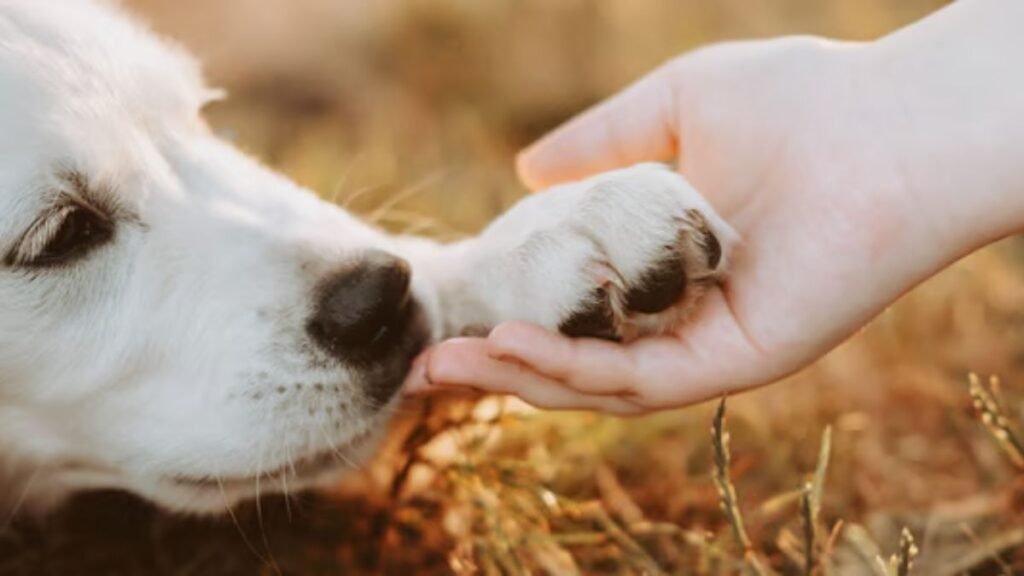
The best response depends on why your dog is pawing you. If it’s affectionate or seeking comfort, gentle petting and calm reassurance can strengthen your bond. If the pawing is attention-seeking and becoming excessive, it may help to avoid reinforcing it unintentionally and instead reward calmer behaviors.
Understanding your dog’s personality, routine, and emotional state plays a key role in responding appropriately. Dogs are incredibly perceptive and often adjust their behavior based on how we react. Thoughtful responses help maintain clear communication and mutual trust.
Strengthening the Human-Dog Connection
At its core, a dog placing a paw on you is a reminder of the unique relationship between humans and dogs. It reflects trust, communication, and emotional connection built over time. This small gesture carries meaning shaped by instinct, learning, and affection.
By taking the time to understand what your dog is trying to say, you move beyond surface behavior and into deeper companionship. Each paw placed gently on you is a moment of connection, a silent message that says your dog sees you as more than just a caretaker. You are a source of comfort, safety, and belonging.
Final Thoughts
When dogs put their paws on us, they are speaking in the language they know best. Whether they are asking for attention, offering affection, seeking reassurance, or sharing excitement, this behavior is rarely meaningless. It is a window into their emotional world and a chance for us to respond with empathy and understanding.
The next time your dog rests a paw on you, pause and observe the moment. Consider their body language, the environment, and what they might be feeling. In doing so, you honor the bond you share and deepen the silent conversation that makes the human-dog relationship so special.
FAQs
Q1. Why does my dog put its paw on me?
Dogs often place their paw on you to show affection, seek attention, or communicate a need in a gentle way.
Q2. Is it a good sign when a dog paws at you?
Yes, in most cases it’s a positive sign that shows trust, bonding, or a desire for interaction.
Q3. Should I stop my dog from putting its paw on me?
Only if it becomes excessive or uncomfortable; otherwise, it’s a normal and affectionate behavior.