
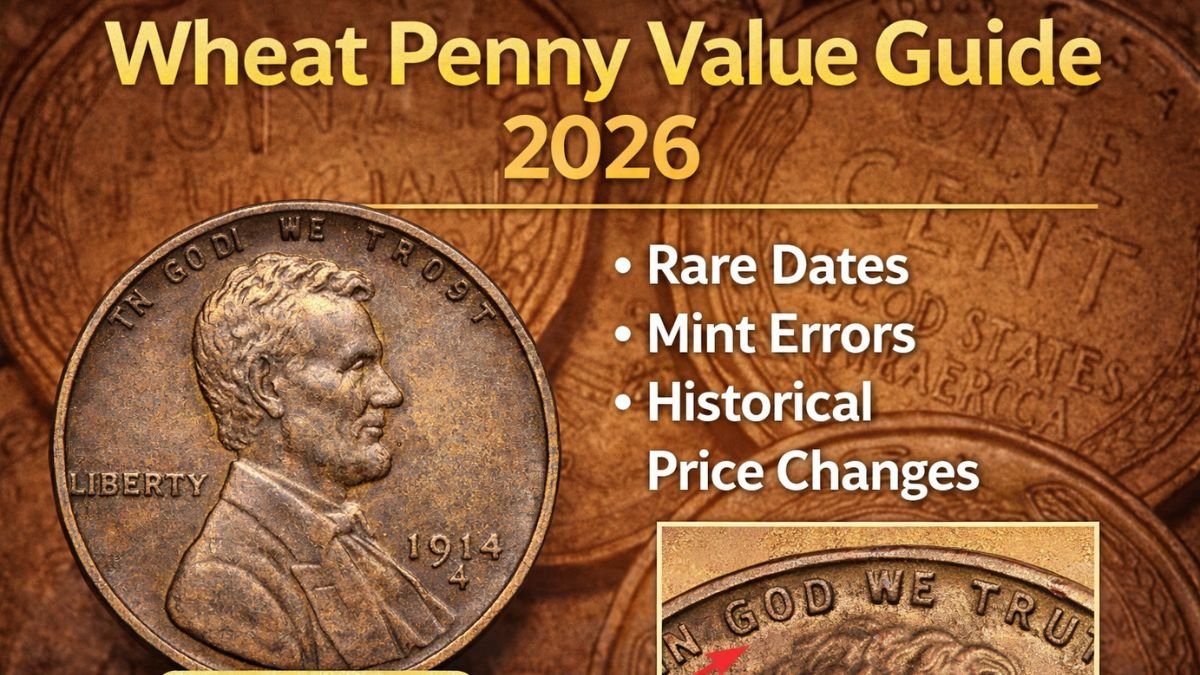
For generations of Americans, the Wheat Penny has been more than just loose change. It is a small copper coin that carries history in its design, stories in its wear, and in some cases, surprising value in today’s collector market. As 2026 approaches, interest in Wheat Pennies continues to grow, driven by rising metal prices, renewed enthusiasm for coin collecting, and the discovery of rare dates and mint errors that can transform an ordinary-looking penny into a valuable treasure. This guide explores the value of Wheat Pennies in 2026, focusing on rare dates, important mint errors, and how prices have changed over time.
Understanding the Wheat Penny and Its Origins
The Wheat Penny, officially known as the Lincoln Wheat Cent, was first introduced in 1909 to honor the 100th birth anniversary of Abraham Lincoln. It marked a historic moment in U.S. coinage, as it was the first circulating American coin to feature a real person rather than a symbolic figure. The reverse side displayed two wheat stalks framing the words “One Cent,” symbolizing prosperity and national strength.
Produced until 1958, Wheat Pennies were minted for nearly half a century, making them relatively common compared to other historic coins. However, age alone does not determine value. Factors such as rarity, mint location, condition, and errors play a crucial role in deciding how much a Wheat Penny is worth in 2026.
Why Wheat Pennies Still Matter to Collectors
Wheat Pennies remain popular because they are accessible. Many collectors remember finding them in old jars, inherited collections, or even in circulation decades ago. This emotional connection, combined with genuine historical importance, keeps demand strong.
In 2026, Wheat Pennies also benefit from a growing interest in tangible assets. Coins offer a sense of stability and nostalgia that digital investments cannot replicate. While most Wheat Pennies are worth only a few cents to a few dollars, certain examples can command hundreds, thousands, or even more, depending on rarity and condition.
Key Factors That Determine Wheat Penny Value in 2026
The value of a Wheat Penny is shaped by several interconnected elements. The year and mint mark are often the first things collectors look for. Pennies minted in lower quantities or during historically significant periods tend to be more valuable.
Condition is equally important. Coins are graded on a scale ranging from heavily worn to mint state. Even common dates can become valuable if they survive in exceptionally well-preserved condition. Finally, mint errors can dramatically increase value, as they represent rare mistakes that slipped through quality control at the time of production.
Rare Wheat Penny Dates to Watch in 2026
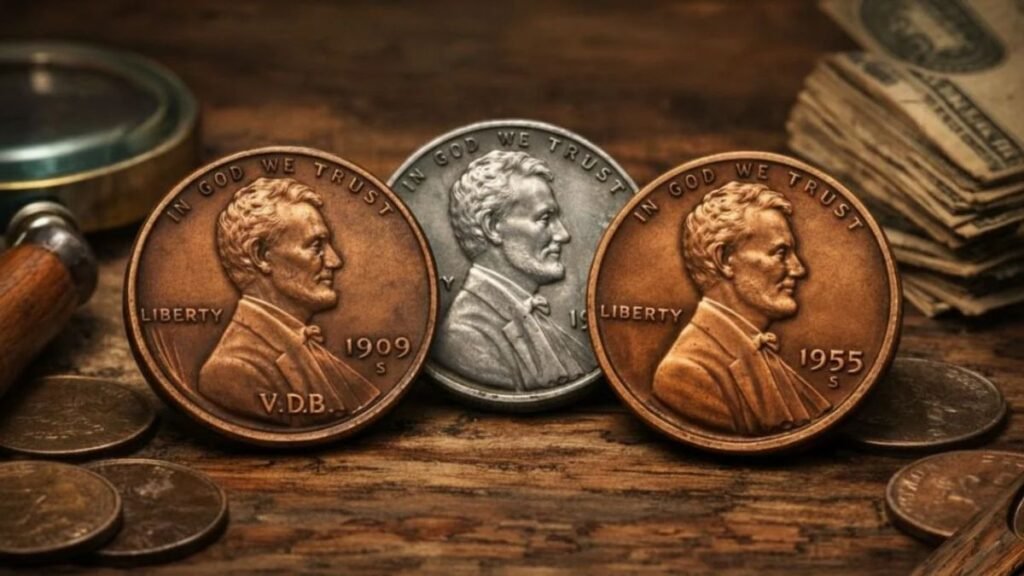
Certain Wheat Penny dates have long been considered key to any serious collection. Among the most famous is the 1909-S VDB, which features the initials of the coin’s designer on the reverse. Its low mintage makes it one of the most sought-after Wheat Pennies.
Other rare dates include issues from the early 1910s and 1920s, especially those minted in San Francisco or Denver in limited numbers. Pennies from years affected by economic hardship or wartime metal shortages often saw reduced production, increasing their scarcity today.
By 2026, these rare dates are expected to maintain or slightly increase their value, especially as fewer high-quality examples remain available on the open market.
The Importance of Mint Marks
Mint marks play a crucial role in identifying where a Wheat Penny was produced. Coins were minted primarily in Philadelphia, Denver, and San Francisco. Philadelphia coins typically lack a mint mark, while Denver coins carry a “D” and San Francisco coins display an “S.”
In many years, Philadelphia produced far more coins than the other mints. As a result, Wheat Pennies with “D” or “S” mint marks are often scarcer and more valuable. Collectors in 2026 continue to pay close attention to mint marks, as they can significantly affect a coin’s desirability and price.
Mint Errors That Can Increase Value Dramatically
Mint errors are among the most exciting discoveries for collectors. These errors occur when something goes wrong during the minting process, resulting in coins with unusual features. Common types of errors include doubled dies, off-center strikes, and missing elements.
One of the most famous Wheat Penny errors is the 1955 doubled die, where the date and lettering appear doubled due to a misaligned die. Even well-worn examples of such error coins can fetch substantial sums. In 2026, error coins continue to attract strong interest, particularly as collectors become more educated about what to look for.
Wartime Wheat Pennies and Their Unique History
The early 1940s brought dramatic changes to U.S. coin production due to World War II. In 1943, copper was needed for military purposes, leading to the production of steel cents coated in zinc. While these are not traditional copper Wheat Pennies, they are closely associated with the series and are widely collected.
Interestingly, a small number of 1943 Wheat Pennies were mistakenly struck in copper instead of steel. These rare errors are among the most valuable U.S. coins ever produced. Although extremely rare, their existence adds intrigue to the Wheat Penny series and keeps collectors searching through old collections even today.
Historical Price Changes of Wheat Pennies
Over the decades, Wheat Penny values have followed broader trends in the collectibles market. In the mid-20th century, most Wheat Pennies were considered old but not especially valuable. As coin collecting grew in popularity during the 1960s and 1970s, prices began to rise, particularly for key dates and high-grade examples.
The late 1990s and early 2000s saw renewed interest driven by online marketplaces, which made it easier for collectors to buy and sell coins globally. By the 2020s, Wheat Penny prices reflected both collector demand and fluctuations in copper prices.
In 2026, historical data suggests a stable market with gradual appreciation rather than explosive growth. Rare and high-quality coins continue to outperform common, heavily worn examples.
The Role of Condition and Coin Grading
Condition remains one of the most critical factors in determining value. A Wheat Penny with sharp details, original luster, and minimal wear can be worth many times more than the same coin in poor condition.
Professional grading services help establish trust in the market by assigning standardized grades. In 2026, collectors increasingly rely on certified coins, especially for higher-value purchases. While grading involves a cost, it can significantly enhance a coin’s marketability and final selling price.
Are Wheat Pennies a Good Investment in 2026?
While Wheat Pennies should not be viewed as a guaranteed investment, they can be a rewarding part of a diversified collection. Their value is influenced by collector interest rather than purely speculative forces, which provides a degree of stability.
In 2026, Wheat Pennies are best approached with a long-term mindset. Collectors who focus on quality, rarity, and historical significance are more likely to see appreciation over time. Emotional value also plays a role, as many collectors enjoy the connection to history that these coins provide.
Tips for Identifying Valuable Wheat Pennies
Collectors are encouraged to examine dates, mint marks, and overall condition carefully. Using proper lighting and magnification can help reveal subtle details, including possible errors. Storing coins correctly, away from moisture and harsh environments, is essential to preserving value.
Education remains the most powerful tool. Understanding which years are rare and what types of errors are significant can prevent valuable coins from being overlooked or undervalued.
The Future Outlook for Wheat Penny Values
Looking ahead, Wheat Pennies are likely to remain a cornerstone of American coin collecting. As older collections are broken up and fewer coins remain in pristine condition, scarcity will continue to support prices for desirable examples.
In 2026, the Wheat Penny market reflects a blend of nostalgia, history, and careful analysis. While not every Wheat Penny will be worth a fortune, the thrill of discovery keeps collectors engaged and hopeful.
Conclusion: Why Wheat Pennies Still Capture Attention
The Wheat Penny Value Guide 2026 reveals a market shaped by history, rarity, and human curiosity. These humble coins tell stories of economic change, wartime sacrifice, and everyday life in America’s past. Whether you are a seasoned numismatist or someone rediscovering an old jar of pennies, Wheat Pennies offer both educational and emotional rewards.
As collectors continue to search for rare dates and mint errors, Wheat Pennies remain a powerful reminder that even the smallest objects can carry lasting value. In 2026, their appeal endures, not just because of what they are worth, but because of what they represent.
FAQs
Q1. Are all Wheat Pennies valuable in 2026?
No, most are common, but rare dates, mint errors, and high-condition coins can be valuable.
Q2. What is the most valuable Wheat Penny?
The 1909-S VDB and rare 1943 copper Wheat Pennies are among the most valuable.
Q3. Should I get my Wheat Penny professionally graded?
Yes, grading can increase trust and value, especially for rare or high-quality coins.