
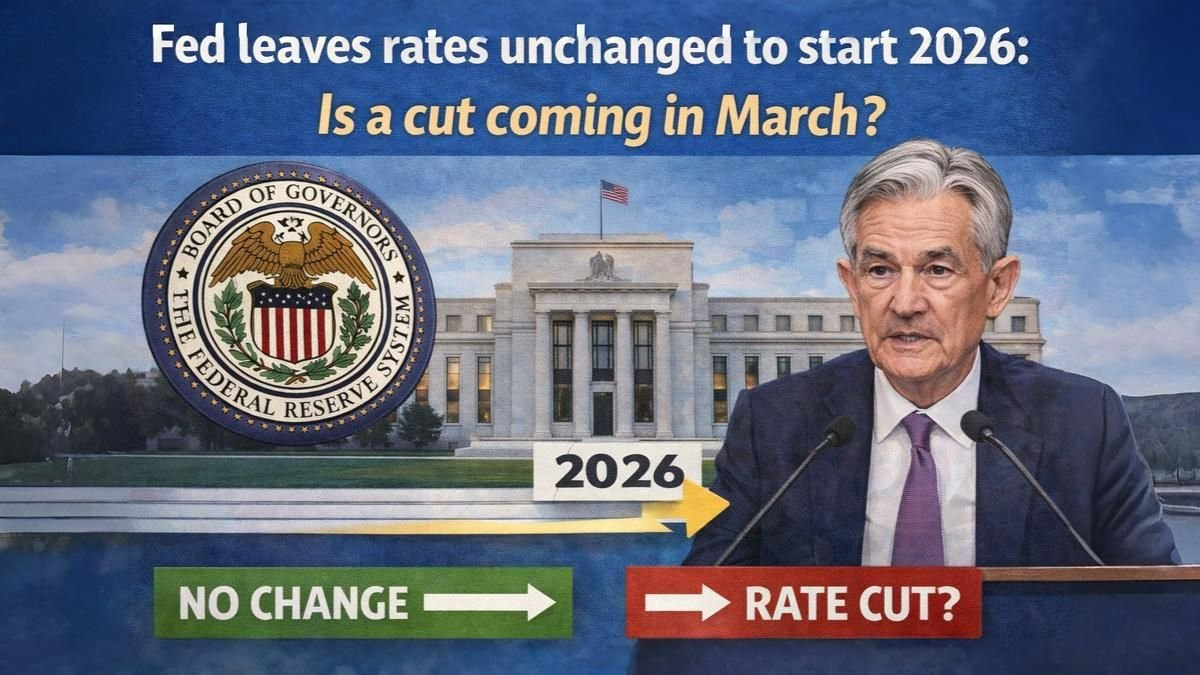
As the calendar turns to 2026, the U.S. economy finds itself at a familiar crossroads. The Federal Reserve has decided to leave interest rates unchanged in its first policy move of the year, choosing caution over surprise. For households, businesses, and investors who have spent the past few years navigating rapid rate hikes and persistent inflation concerns, the decision brings a sense of temporary stability. Yet it also raises a pressing question that now dominates financial headlines: is a long-awaited rate cut finally coming in March?
Why the Fed Chose to Leave Rates Unchanged
The Fed’s decision to hold rates steady reflects a careful balancing act. On one hand, inflation has cooled from its peak, easing some of the pressure that drove aggressive tightening in earlier years. On the other, price growth has not fully settled into the Fed’s comfort zone, and policymakers remain wary of declaring victory too soon. By keeping rates unchanged, the central bank is signaling patience, buying time to assess whether recent progress is durable or merely temporary.
Inflation Progress, but Not a Clear Victory
Inflation remains the single most important factor guiding Fed policy. While headline inflation has moderated, core measures that exclude volatile food and energy prices continue to show lingering pressures. For the Fed, this creates an uncomfortable gray area. Cutting rates too early could reignite inflation, undermining credibility and forcing even harsher measures later. Holding steady allows policymakers to watch how inflation behaves in the early months of 2026 before making a decisive move.

The Labor Market’s Quiet Strength
Another key reason for the Fed’s pause lies in the labor market. Employment has remained resilient, with steady job creation and relatively low unemployment. Wage growth has slowed compared to previous years, but it is still strong enough to support consumer spending. From the Fed’s perspective, a healthy labor market reduces the urgency to cut rates immediately. As long as workers remain employed and incomes continue to rise modestly, the economy can tolerate higher borrowing costs for a bit longer.
How Markets Reacted to the Decision
Financial markets greeted the Fed’s announcement with a mix of calm and anticipation. Stocks showed muted movements, reflecting the fact that a rate hold was widely expected. Bond yields, meanwhile, remained relatively stable as investors shifted their focus from the present decision to what might come next. The real action, it seems, has been postponed until March, when markets believe the Fed may finally pivot toward easing.
Why March Has Become the Focus
March has emerged as a potential turning point because it offers the Fed a clearer picture of economic conditions. By then, policymakers will have several more inflation reports, updated employment data, and fresh insights into consumer spending trends. This additional information could provide the confidence needed to justify a rate cut. For now, March represents hope for borrowers and a test of patience for those eager to see relief.
What a Rate Cut Would Mean for Consumers
For everyday Americans, a rate cut could bring meaningful relief. Lower interest rates often translate into reduced borrowing costs for mortgages, auto loans, and credit cards. Homebuyers who have been sidelined by high mortgage rates may re-enter the market, while existing homeowners could look forward to refinancing opportunities. Even a small cut could improve household budgets and boost confidence, particularly after years of financial strain.
Businesses Watching Closely
Businesses are also paying close attention to the Fed’s next move. Higher interest rates have made borrowing more expensive, discouraging investment and expansion in some sectors. A rate cut in March could signal a friendlier environment for growth, encouraging companies to hire, invest in new projects, and increase spending. For small businesses, in particular, lower rates could ease cash flow pressures and improve access to credit.
The Risks of Cutting Too Soon
Despite the optimism surrounding a potential March cut, the risks remain significant. If inflation flares up again, the Fed could be forced to reverse course, damaging its credibility and unsettling markets. Policymakers are acutely aware of past episodes where premature easing led to prolonged inflationary periods. This historical memory continues to shape the Fed’s cautious approach, even as calls for relief grow louder.
Global Economic Factors in Play
The Fed does not operate in isolation. Global economic conditions also influence its decisions. Slowing growth in major economies, geopolitical tensions, and fluctuating energy prices all add layers of complexity to the outlook. A rate cut in the U.S. could weaken the dollar, affecting trade balances and global capital flows. These international considerations make the Fed’s decision-making process even more delicate.
Investor Sentiment and Expectations
Investor expectations can sometimes become self-fulfilling. As markets increasingly price in a March rate cut, any deviation from that expectation could trigger volatility. If the Fed signals hesitation or delays easing beyond March, stocks could wobble and bond yields might rise. Conversely, a clear indication that cuts are coming could fuel a rally, boosting risk assets and improving overall sentiment.
Communication Is Key for the Fed
One of the Fed’s most powerful tools is communication. By carefully crafting its statements and guidance, the central bank can influence expectations without changing rates immediately. Recent messaging has emphasized data dependence, reinforcing the idea that future decisions will be guided by evidence rather than timelines. This approach keeps options open while preparing markets for various outcomes.
How Households Are Adjusting to the Pause
For households, the rate hold reinforces the reality that higher borrowing costs may persist a bit longer. Many families have already adjusted by cutting discretionary spending, delaying major purchases, or prioritizing debt repayment. While the prospect of a March cut offers hope, the Fed’s cautious stance suggests that consumers should continue planning for a higher-rate environment, at least in the near term.
The Political Backdrop
Although the Fed operates independently, political pressures are never entirely absent. As 2026 unfolds, economic conditions will inevitably influence public sentiment and policy debates. Lawmakers may push for rate cuts to stimulate growth, while critics warn against compromising the Fed’s independence. Navigating this environment requires careful judgment to maintain trust and credibility.
Lessons from Past Rate Cycles
Looking back at previous rate cycles provides valuable context. Historically, the Fed has often paused before pivoting, using the pause to confirm that economic trends are moving in the desired direction. In some cases, rate cuts followed quickly; in others, they were delayed longer than markets expected. These precedents remind observers that patience, not prediction, is often the wiser stance.
What March Could Reveal
When March arrives, the decision may hinge on a handful of critical indicators. Inflation trends will top the list, followed closely by employment data and consumer spending. Any signs of economic weakness could strengthen the case for a cut, while persistent inflation could keep rates unchanged. In this sense, March is less a deadline and more a checkpoint in an ongoing journey.

Preparing for Multiple Outcomes
For investors and consumers alike, the best approach may be preparation rather than prediction. A March rate cut is possible, but not guaranteed. Building financial plans that can withstand both scenarios—continued high rates or gradual easing—offers greater resilience. Diversification, prudent budgeting, and long-term thinking remain essential strategies.
A Pause Filled With Possibility
The Fed’s decision to leave rates unchanged at the start of 2026 marks a moment of cautious optimism. Inflation has eased, the labor market remains strong, and the economy continues to grow, albeit more slowly. At the same time, uncertainty lingers, and the path forward is far from certain. Whether March brings a rate cut or another pause, one thing is clear: the Fed is determined to move carefully, guided by data rather than pressure.
Looking Ahead to the Next Chapter
As attention shifts toward March, anticipation will only grow. Each new economic report will be scrutinized, each Fed comment dissected. The question of a rate cut has become more than a policy debate; it is a reflection of broader hopes for economic stability and relief. For now, the Fed has chosen to wait, and the nation waits with it, watching closely for signs of what comes next.
FAQs
Q1. Why did the Fed leave interest rates unchanged at the start of 2026?
The Federal Reserve held rates steady to monitor inflation trends and ensure economic stability.
Q2. Is a rate cut expected in March 2026?
A March rate cut is possible, but it will depend on upcoming inflation and employment data.
Q3. How does this decision affect consumers and borrowers?
It means borrowing costs remain high for now, though a future cut could provide relief later in the year.