
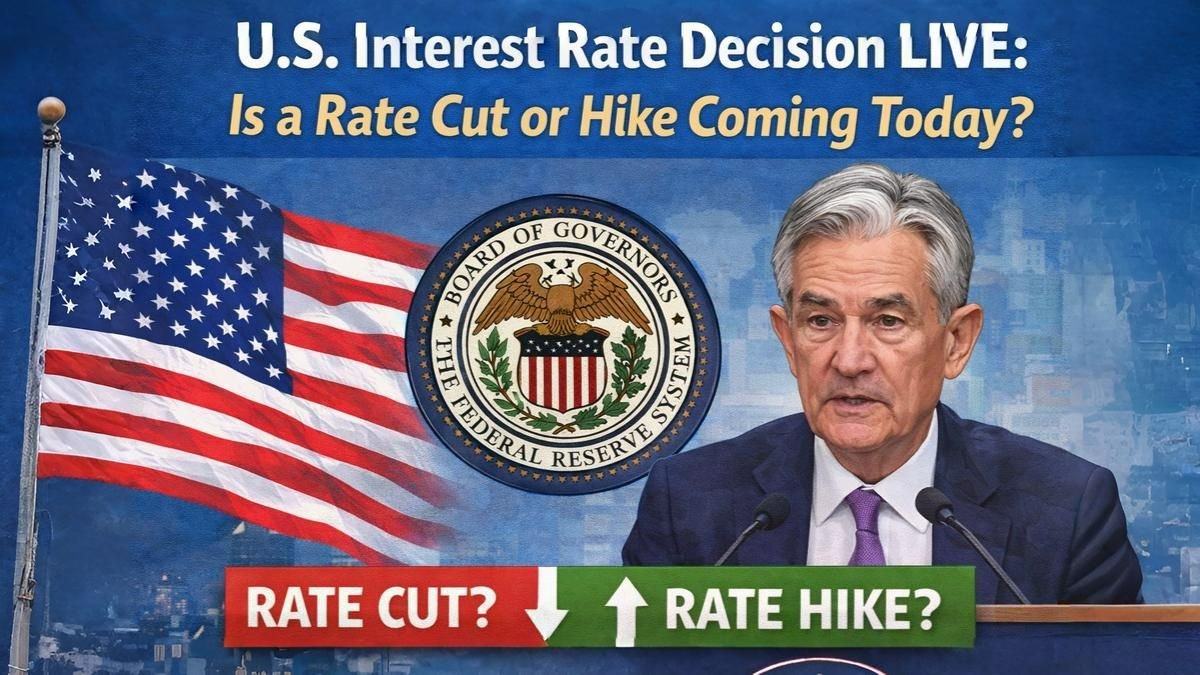
All eyes are on Washington today as the United States prepares for one of the most closely watched economic announcements of the year. The U.S. interest rate decision has become a pivotal moment not just for economists and investors, but for everyday Americans feeling the impact of borrowing costs, inflation, and market volatility. As anticipation builds, the central question dominates headlines and conversations alike: is a rate cut or a rate hike coming today?
The decision, announced by the Federal Reserve, carries wide-ranging consequences for financial markets, housing, jobs, and global economic stability. Whether rates move up, down, or remain unchanged, the outcome will signal how policymakers view the current state of the economy and what they expect in the months ahead.
Why the Interest Rate Decision Matters So Much
Interest rates influence nearly every corner of the economy. From mortgage payments and credit card bills to business investments and stock market performance, the Fed’s benchmark rate sets the tone. When rates are high, borrowing becomes more expensive, slowing spending and cooling inflation. When rates are lowered, money flows more freely, encouraging growth but potentially reigniting price pressures.
Today’s decision is especially significant because it comes at a time when inflation has shown signs of easing but remains a concern, while economic growth and employment continue to send mixed signals. The Fed is walking a delicate line, balancing the need to control inflation without pushing the economy into unnecessary slowdown.
The Economic Backdrop Ahead of Today’s Decision
In the months leading up to this announcement, economic data has painted a complex picture. Inflation has cooled from its peak, offering hope that previous rate hikes are working. However, prices in key areas such as housing, services, and energy remain elevated, keeping pressure on policymakers to stay cautious.
At the same time, job growth has been resilient, and consumer spending has held up better than many expected. This strength gives the Fed some room to be patient, but it also raises concerns that the economy could overheat if policy is loosened too soon. These conflicting signals are at the heart of today’s uncertainty.
Rate Cut Expectations and Market Optimism
Many investors have been hoping for a rate cut, viewing it as a sign that inflation is under control and that economic conditions are stabilizing. A cut would likely boost stock markets, ease borrowing costs, and provide relief to sectors sensitive to interest rates, such as real estate and technology.
Supporters of a rate cut argue that maintaining high rates for too long risks slowing growth unnecessarily. They point to cooling inflation data and believe the Fed can begin easing policy without undoing its progress. For households struggling with high loan payments, a rate cut would be a welcome change.
The Case for Holding Rates Steady
Despite optimism around a possible rate cut, many analysts believe the most likely outcome today is no change. Holding rates steady allows the Fed to gather more data and assess whether inflation continues to move toward its target in a sustainable way.
A pause would signal caution rather than indecision. It would suggest that policymakers believe current rates are sufficiently restrictive and want to avoid sending mixed messages to markets. Stability, in this case, may be seen as the safest option, especially given lingering uncertainties both domestically and globally.
Could a Rate Hike Still Be on the Table?
While less expected, a rate hike cannot be entirely ruled out. If the Fed believes inflation risks remain elevated or that financial conditions have loosened too much, it may choose to raise rates further. Such a move would likely surprise markets and could trigger volatility.
A hike would send a clear message that inflation remains the top priority, even if it means short-term discomfort. For consumers and businesses, however, higher rates would translate into continued financial strain, making this option the most controversial.
The Role of Fed Leadership and Messaging
Beyond the rate decision itself, markets are paying close attention to the Fed’s tone and guidance. Statements from Chair Jerome Powell often shape expectations more than the numerical decision alone. His words can indicate whether a rate cut is likely later this year or whether policy will remain tight for longer.
Clear communication is critical. Investors, businesses, and consumers look for reassurance that the Fed has a coherent strategy and a steady hand on the wheel. Any hint of uncertainty or contradiction can amplify market swings.
How Financial Markets Are Reacting Live
In the hours leading up to the decision, financial markets have been cautious. Stock indices are fluctuating as traders hedge their bets, bond yields are adjusting to shifting expectations, and the U.S. dollar is responding to speculation around future policy direction.
Markets thrive on clarity, and today’s announcement promises to deliver it, at least temporarily. Whether the reaction is positive or negative will depend on how closely the decision aligns with current expectations and how confident the Fed sounds about the path ahead.
Impact on Everyday Americans
For many Americans, the interest rate decision feels personal. Mortgage rates influence whether families can afford to buy homes. Auto loans and credit card interest rates affect monthly budgets. Small businesses rely on affordable credit to grow and hire.
A rate cut could bring gradual relief, while higher or unchanged rates may require continued adjustment. The Fed’s challenge is to consider these real-world impacts while staying focused on long-term economic stability.
Global Implications of the Decision
The U.S. interest rate decision does not stop at national borders. Global markets often react sharply to Fed moves, as U.S. rates influence capital flows, currency values, and economic conditions worldwide. Emerging markets, in particular, are sensitive to changes in U.S. monetary policy.
A rate cut could ease global financial conditions, while a hike might strengthen the dollar and put pressure on other economies. This global ripple effect adds another layer of complexity to today’s decision.
What Analysts Are Saying Ahead of the Announcement
Economists remain divided. Some believe inflation trends justify a cautious move toward easing. Others warn that premature cuts could reignite price pressures and undermine credibility. The diversity of opinions reflects the unprecedented nature of the current economic environment.
Most agree on one thing: today’s decision is not just about now, but about the message it sends for the future. Forward guidance will shape expectations well beyond this single meeting.
Preparing for What Comes Next
Regardless of the outcome, the interest rate decision marks another chapter in an ongoing economic story. Consumers and businesses alike should prepare for continued uncertainty and remain flexible. Financial planning, budgeting, and long-term thinking are more important than ever in a shifting rate environment.
For investors, diversification and patience remain key. For households, understanding how rates affect personal finances can help in making informed decisions.
Final Thoughts
The U.S. interest rate decision LIVE today is more than a headline event. It is a moment that reflects the challenges of managing a complex, interconnected economy. Whether the Fed chooses a rate cut, a hike, or a pause, the decision will shape economic conditions in the months ahead.
As the announcement unfolds, one thing is clear: interest rates remain at the center of economic life, influencing confidence, opportunity, and stability. Today’s decision will not provide all the answers, but it will offer crucial insight into where the U.S. economy may be headed next.
FAQs
Q1. Who decides U.S. interest rates?
The decision is made by the Federal Reserve after reviewing inflation, jobs data, and economic growth.
Q2. What does a rate cut mean for consumers?
A rate cut can lower borrowing costs, making loans, mortgages, and credit cards slightly cheaper over time.
Q3. Why might rates stay the same today?
Rates may remain unchanged if policymakers want more data to confirm inflation is under control before making a move.